Imaging

Designing high-performance imaging environments that work today and adapt for tomorrow.
service banner
Let's take a look

Imaging spaces planned for precision and long-term flexibility

We help health systems navigate the complex demands of imaging upgrades and replacements—managing equipment constraints, future-proofing pathways, and creating calmer, patient-centered experiences—all while minimizing operational disruption.

Experience across imaging modalities

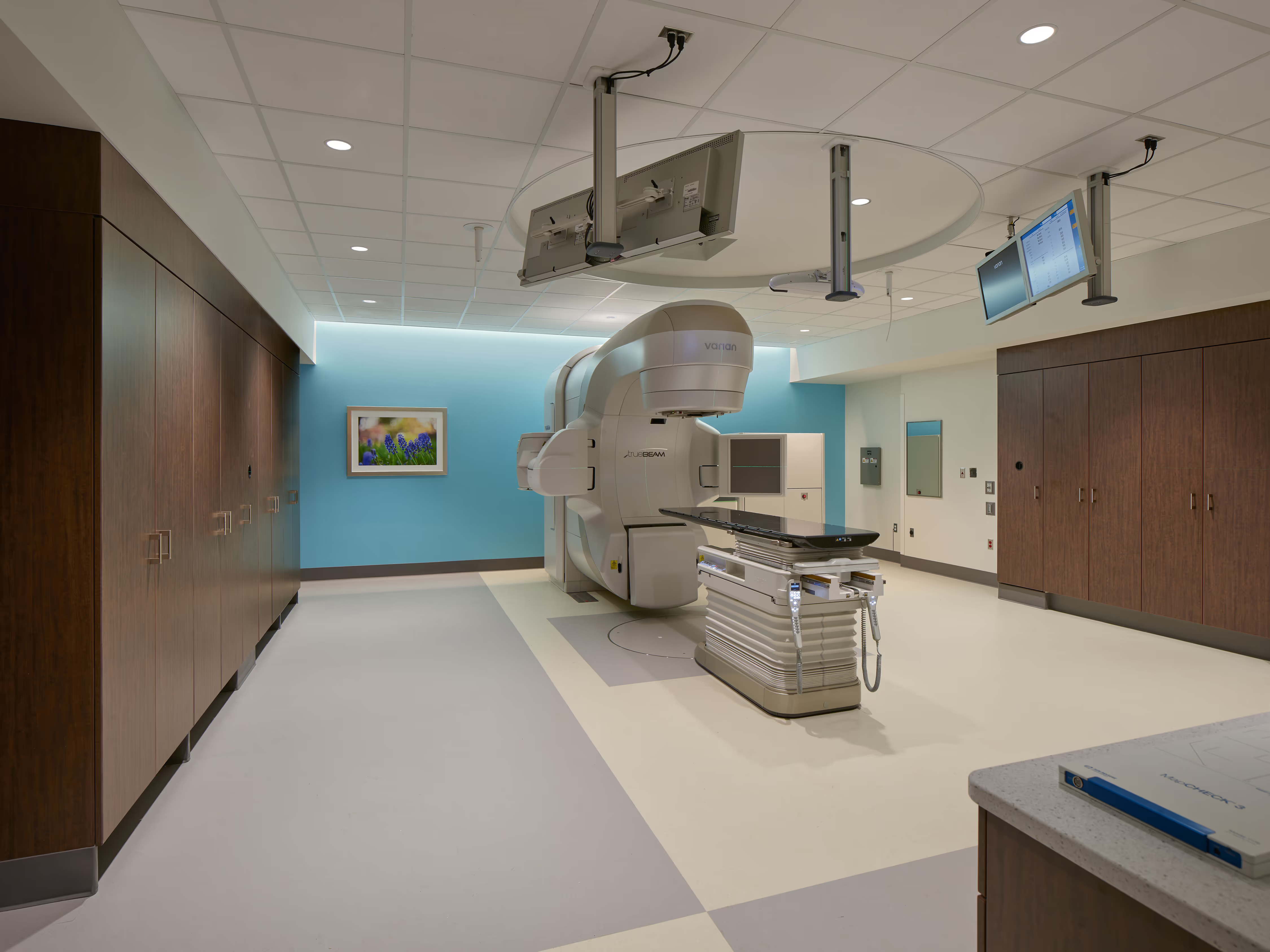
Our work spans CT, MRI, PET/CT, nuclear medicine, ultrasound, and general radiology—supporting renovations, replacements, and highly complex equipment upgrades in active healthcare environments.

Complexity

Managing space, structure, and equipment demands

Imaging projects require early, precise coordination with equipment vendors to manage weight, cabling, MEP loads, and installation pathways. Many suites sit in tight or below-grade locations, demanding careful planning for structural reinforcement and future equipment swaps. By designing knockout panels, clear access routes, and flexible infrastructure, we reduce long-term disruptions and help clients stay ahead of rapid technological change.
full image

Future-proofing for rapid technology evolution

As imaging technology continues to advance—like multi-slice CT scanners generating exponentially more data—facilities must keep pace with both equipment and digital infrastructure. Our teams coordinate closely with engineers and physicists to design shielding, data capacity, and backbone systems that support today’s requirements as well as emerging needs. This approach helps clients avoid costly rework and ensures their imaging environments remain adaptable for years to come.

COMFORT

Design that lowers anxiety and supports care

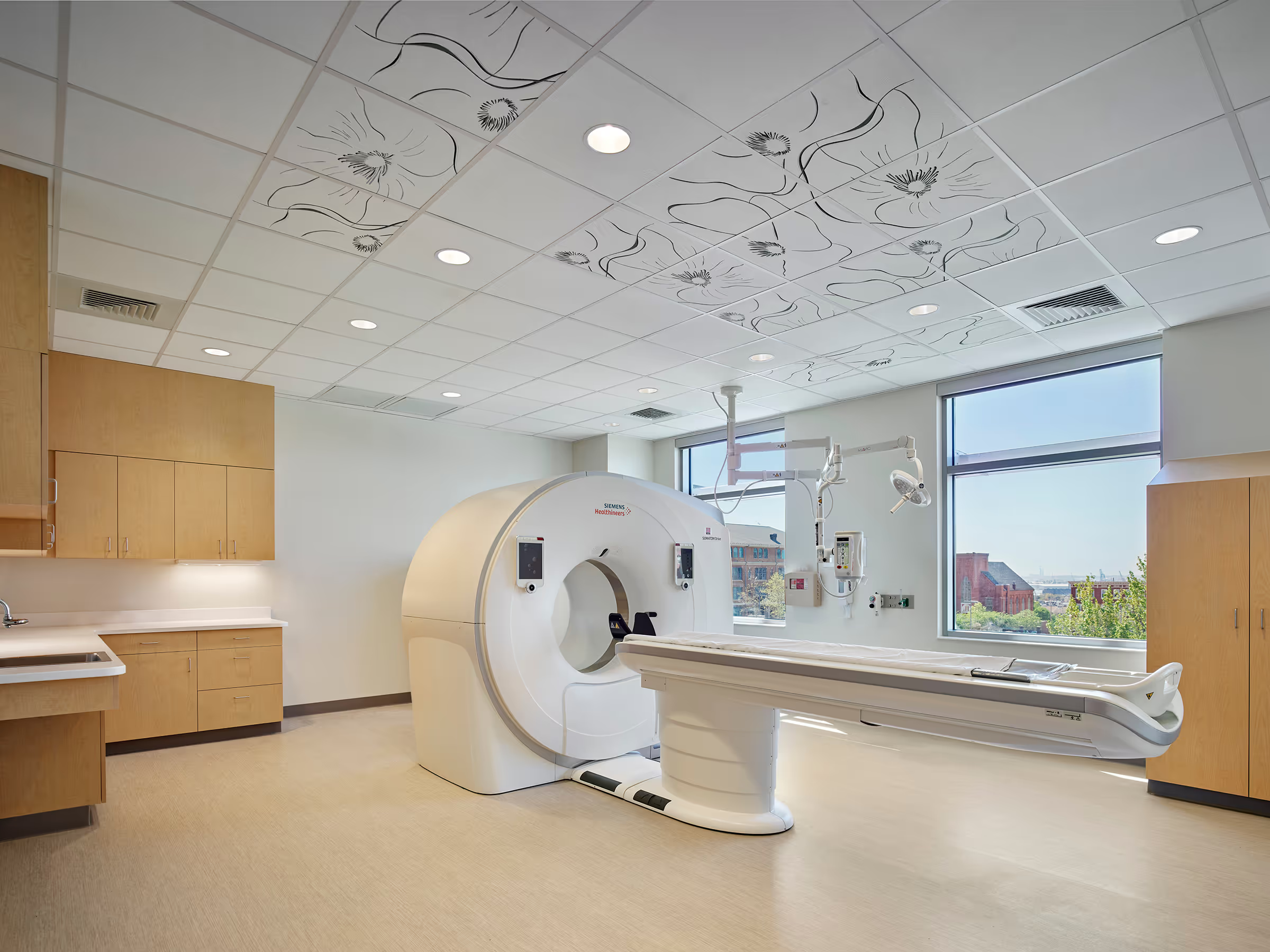
We use lighting, ceiling graphics, and customizable audio to give patients more control and comfort during their scans. Solutions implemented for the Inova Health System GI/Apheresis suite—such as dynamic lighting and patient-controlled settings—demonstrate how small experiential choices improve satisfaction, reduce stress, and support better care interactions.